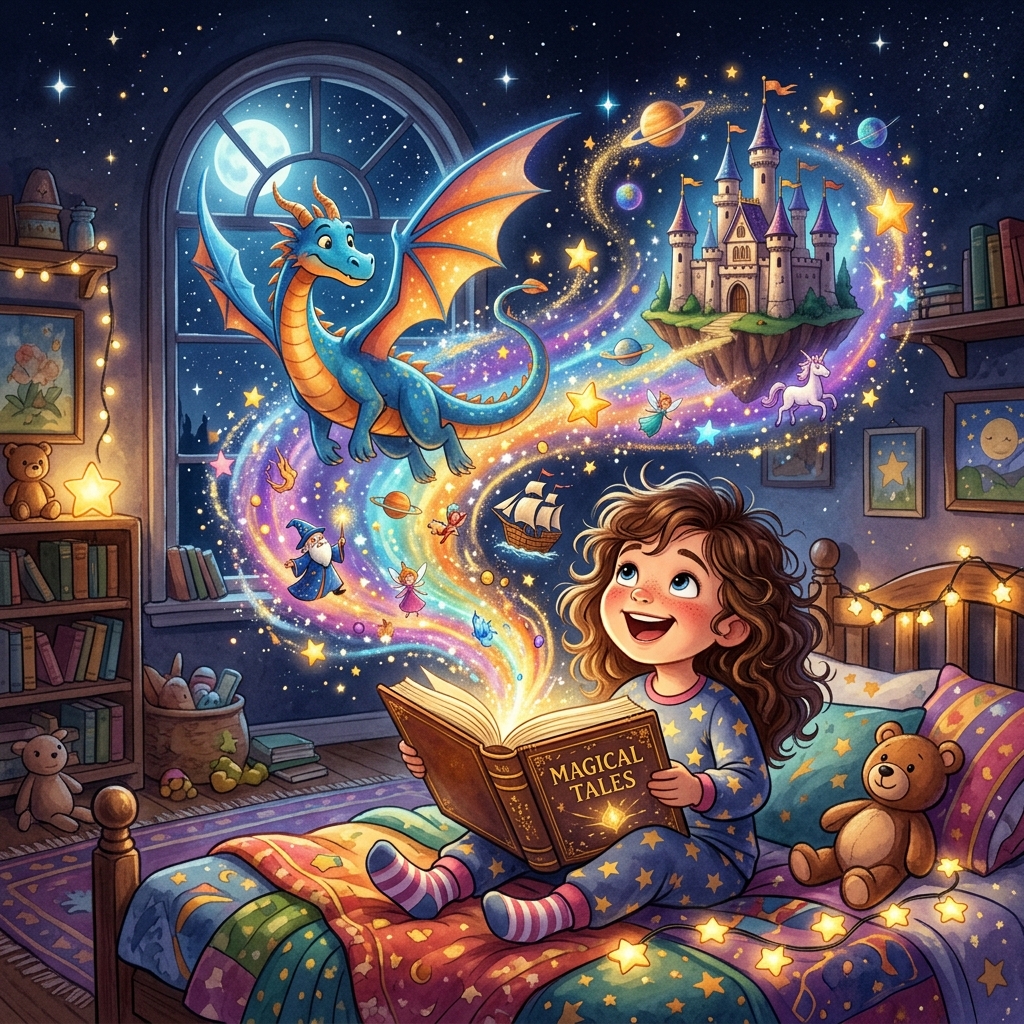
When your child pretends that a cardboard box is a spaceship, or that they are a brave knight fighting a dragon, they are doing much more than just playing. They are engaging in imaginative play—a critical component of cognitive and social development.
Why Magical Stories Matter
Children's picture books are filled with talking animals, magical forests, and impossible scenarios. While these stories are entertaining, they serve a profound developmental purpose.
1. Abstract Thinking
Imaginative stories force children to visualize things they have never seen in real life. This builds the foundation for abstract thinking—the ability to understand concepts that aren't physically present. This skill is essential for advanced math, science, and reading comprehension later in life.
2. Problem-Solving Skills
In magical stories, characters often face bizarre or insurmountable challenges. When a child reads about a character creatively solving a problem, they learn to approach their own real-world problems with flexibility and creativity.
3. Processing the Real World
Children often use imaginative play to process complex real-world situations. A story about a brave little bear starting at a new forest school helps a child process their own anxieties about starting kindergarten.
How to Foster Imagination
- Read Diverse Stories: Introduce them to a wide variety of genres—from realistic fiction to high fantasy.
- Encourage "What If" Questions: While reading, ask them to imagine alternative endings.
- Provide Unstructured Playtime: Give them the time and space to act out the stories they read.
Fuel your child's imagination today with our magical Interactive Storybook Collection.