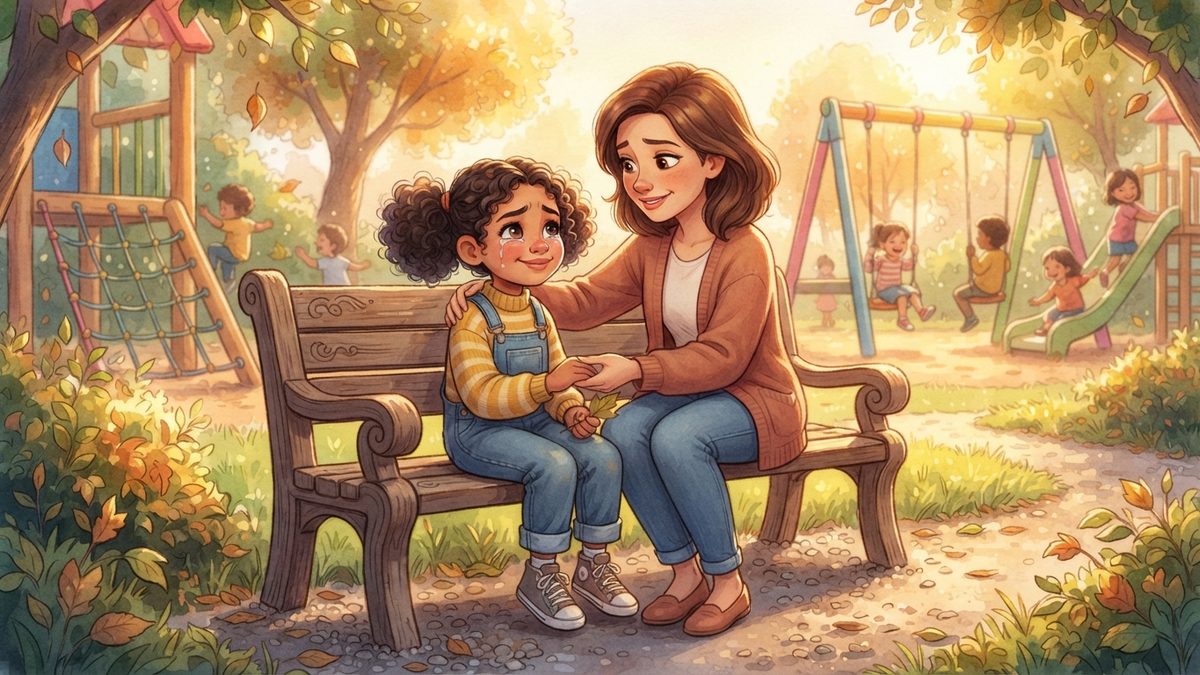
At the end of an exhausting workday, it feels natural to collapse onto your child’s bed and let your guard down. You might vent about a demanding boss, share worries about household finances, or lean on your seven-year-old for reassurance after a disagreement with your partner. Because they listen with wide eyes and extraordinary empathy, it is easy to assume they are simply mature for their age.
However, pediatric psychologists warn that treating children as peers or emotional sounding boards creates an invisible crisis. Recognizing subtle emotional parentification signs in kids is critical before this role reversal disrupts emotional development. When adults inadvertently turn their children into confidants, they dismantle the protective boundary every child requires to feel psychologically secure.
Children do not possess the neurobiological framework to process adult emotional burdens. When forced into the role of a companion, counselor, or peer, their developing nervous systems internalize the adult's tension as chronic, developmental stress.
Increase in Baseline Salivary Cortisol
documented in children exposed to chronic adult emotional role reversal versus peer-age baselines
The Hidden Cost of the Confidant Dynamic #
Covert emotional parentification does not look like overt neglect. It occurs in loving, highly communicative homes where parents mistakenly equate emotional vulnerability with healthy intimacy.
When a parent treats a child as an emotional equal, the child’s role flips from being protected to protecting the parent. According to researchers at the Harvard Center on the Developing Child, a child's brain architecture develops through "serve and return" interactions anchored in safety. When the adult returns an adult-sized emotional burden, the child’s hypothalamic-pituitary-adrenal (HPA) axis activates survival mechanisms, flooding their brain with toxic stress.
A child who feels responsible for keeping their parent calm, grounded, or happy cannot focus on fundamental childhood milestones. They sacrifice imaginative exploration, emotional self-regulation, and age-appropriate peer relationships to manage adult anxieties they have no power to solve.
How to Spot Emotional Parentification Signs in Kids #
Because parentified children frequently appear cooperative, well-mannered, and thoughtful, their distress often flies under the radar. Teachers and family members may praise them as "little adults," masking a state of persistent nervous system dysregulation.
Here are the primary emotional parentification signs in kids that indicate your child is carrying adult emotional weight:
1. Hypervigilance to Adult Emotional Shifts #
A parentified child constantly scans your facial expressions, tone of voice, and body language. If you sigh, slump your shoulders, or speak abruptly, they freeze or scramble to cheer you up. They feel personally responsible for maintaining emotional harmony in the home.
2. Compulsive Caretaking and "People-Pleasing" #
These children routinely suppress their own needs, anger, or sadness to avoid burdening their parents. They rarely have normative meltdowns because they worry their big feelings will overwhelm an already stressed adult.
3. Chronic Somatic Complaints #
Children process adult emotional tension in their bodies. Chronic stomachaches before school, recurring tension headaches, and bedtime hyperarousal frequently stem from adult worries they cannot articulate or metabolize.
4. Excessive Worry Over Adult Problems #
If your child asks questions about household bills, asks if you are going to get divorced, or worries about your loneliness, they have absorbed adult concerns. They have stepped outside the protective perimeter of childhood.
"Children do not feel safe when they are equal partners in adult problems. They crave a sturdy leader who can contain their world so they are free to simply be children."
— Dr. Becky Kennedy, Clinical Psychologist and Author of Good Inside
Understanding the distinction between open communication and role reversal is vital. As explored in our guide on Parent vs. Friend: Why Kids Need Boundaries, Not Buddies, kids do not want a peer to confide in; they need an emotional anchor who can absorb their storms without tipping over.
Sturdy Warmth vs. Unhealthy Roles: A Direct Comparison #
Preventing emotional parentification does not mean returning to cold, authoritarian parenting. It requires sturdy warmth: unconditional emotional validation paired with unshakable parental leadership.
When parents fail to hold clear boundaries, children become anxious leaders by default. If your child struggles with generalized worry, learning How to Be the Sturdy Leader Your Anxious Child Craves offers an immediate blueprint for restoring security.
The Evening Reset Protocol: 4 Steps for Tonight at 7:30 PM #
Breaking the confidant habit requires immediate, definitive structural shifts in your evening routine. When evening fatigue sets in, boundaries often soften, making bedtime the most common window for emotional dumping.
Use this closed-ended sequence tonight to relieve your child of adult burdens and re-establish your role as the secure base.
Step 1: Adult Compartmentalization (7:30 PM) #
Before entering your child's bedroom, pause for 60 seconds outside their door. Place your hand on your chest, exhale slowly, and mentally park your adult worries outside their space. Your child is entering their sanctuary; adult financial, marital, or professional stress stops at the doorframe.
Step 2: Deliver the Relational Reset Script (7:35 PM) #
If you have leaned on your child recently, release them from duty with a definitive verbal script. Do not ask for their feedback or leave the statement open-ended. State it with grounded confidence:
"You know how I’ve been talking to you about my work stress lately? I realized that was a mistake. Grown-up problems belong to grown-ups. I have other adult friends and tools to handle my hard days. Your only job in this house is to play, learn, and be a kid. I am the parent, and I've got you covered."
If your child immediately asks, "Are you sure you're okay?", hold the sturdy boundary:
"I am completely sure. I love your kind heart, AND it is my job to take care of me, and my job to take care of you."
Step 3: Somatic Co-Regulation via Audio Story (7:45 PM) #
Parentified children often exhibit hyperarousal at bedtime because their brains are working overtime to solve adult problems. Do not engage in sprawling philosophical chats in the dark. Instead, redirect their attention to structured, calming imaginative narratives.
This is where Fabella’s voice-narrated interactive stories serve as an essential developmental tool. Listening to immersive, beautifully scored tales allows a hypervigilant child’s nervous system to step down from alert mode. By sharing an interactive story where the child interacts with gentle, age-appropriate dilemmas, you hand them back their childhood imagination. You sit beside them as a calm co-listener, removing the expectation for them to perform or comfort you.
Step 4: The Firm, Predictable Lights-Out Anchor (8:05 PM) #
End the evening with a closed, loving boundary. Avoid asking open questions like "Is it okay if I leave now?" which subtly shifts authority back to the child.
Deliver your closing anchor:
"The chapter is finished, and our bodies need rest. I am turning the lamp off now. I love you, I am right in the next room, and I will see you in the morning."
Turn off the light, walk out, and keep the door slightly cracked. If they call out with anxious questions about your day, reply with one steady phrase: "Everything is handled. Sleep well."
Restoring the Sanctuary of Childhood #
Children do not thrive when elevated to the rank of co-pilot. They thrive when they know an adult is steering the ship through rough waters, completely unshakeable in their role.
Relieving your child of adult emotional weight is one of the greatest gifts you can offer their nervous system. By noticing early emotional parentification signs in kids, establishing sturdy emotional boundaries, and anchoring your evenings in age-appropriate routines like Fabella storytimes, you give them back their rightful place: safe, protected, and free to simply be kids.