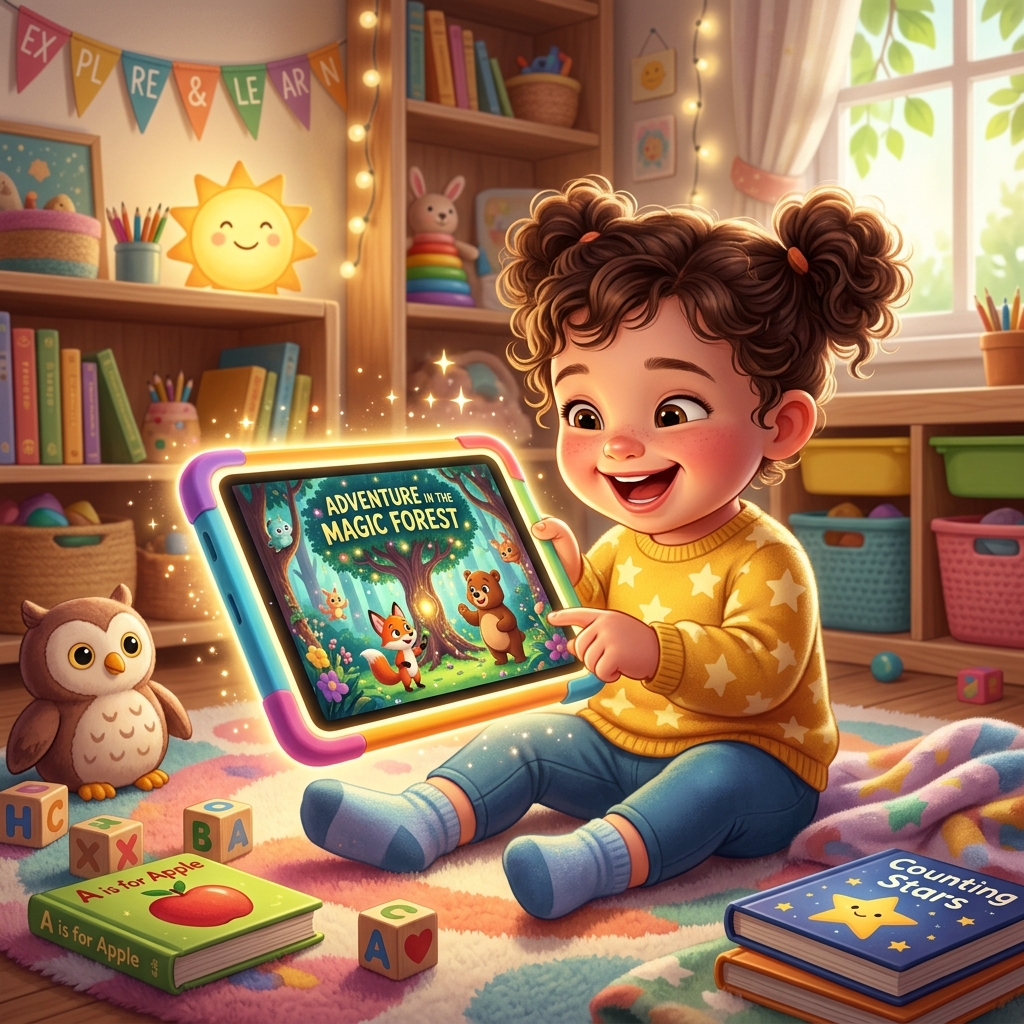
The landscape of children's literature is changing. With the rise of digital learning, interactive read-along books are becoming a powerful tool in early childhood education. But how exactly do they help toddlers learn to read?
The Power of Synchronized Audio
One of the biggest hurdles in early literacy is connecting the spoken word with the written word.
Interactive storybooks bridge this gap by offering synchronized human-like audio narration. As the narrator speaks, children can follow along with the text. This dual-coding of information helps them naturally absorb phonics, pronunciation, and word recognition.
Visual Engagement and Comprehension
Unlike passive video watching, interactive flipbooks require the child to participate.
- Pacing: The child controls when to turn the page, allowing them to process the story at their own speed.
- Context Clues: High-quality illustrations provide vital context clues, helping toddlers deduce the meaning of new vocabulary words.
Screen Time with a Purpose
Many parents worry about screen time, and rightfully so. However, educational experts distinguish between "passive" and "active" screen time.
Interactive reading is highly active. It engages the child's cognitive faculties, encourages questions, and promotes active listening.
Best Practices for Digital Reading
To get the most out of interactive storybooks:
- Read Together: Don't just hand over the tablet. Sit with them and discuss the story.
- Ask Open-Ended Questions: Pause the narration to ask, "What do you think will happen next?"
- Choose High-Quality Content: Look for books with calm, clear narration rather than hyper-stimulating sound effects.
Explore our collection of Voice-Narrated 3D Flipbooks to experience the magic of interactive reading today!