You picture the quintessential storytime scene: a quiet room, a cozy blanket, and your toddler nestled contentedly in your lap while you turn the pages.
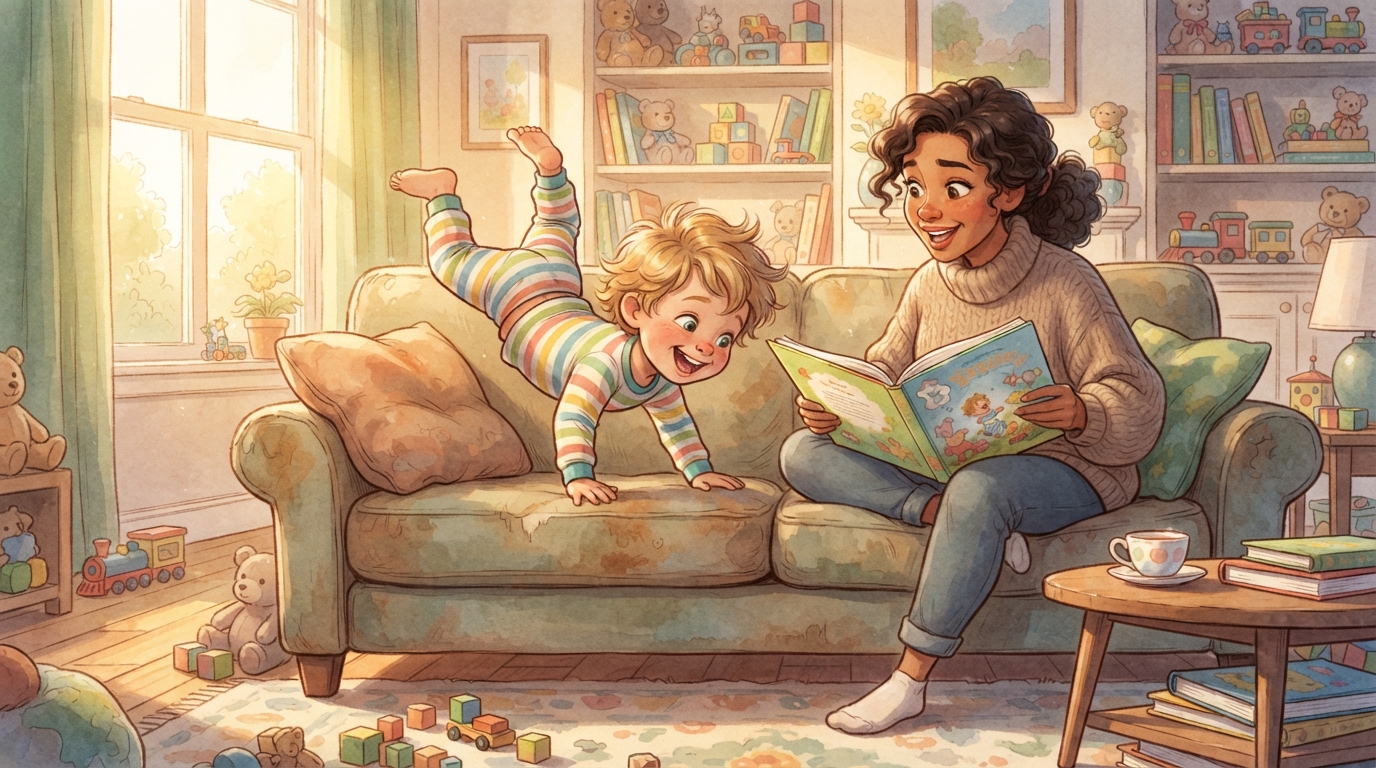
Then reality hits. Within twenty seconds, your little one is somersaulting off the couch, stacking blocks in the corner, or pacing the room like a miniature marathon runner.
If your toddler refuses to sit still for books, take a deep breath. You haven't failed at fostering a love for reading, and your child is not broken. In fact, high-energy toddlers often absorb more language while moving than when forced to stay motionless.
Here is why your active child wiggles through storytime—and how you can transform reading from a battle of wills into an engaging, multisensory adventure.
The Science of the Wiggle: Why Toddlers Need Movement #
To understand why your child won't stay put, it helps to look at toddler neurobiology.
Toddlers are in a stage of rapid motor development. Movement is not a distraction from their learning; it is the primary vehicle through which they process information.
1. Proprioceptive and Vestibular Needs #
Children have high sensory thresholds. Their vestibular system (balance and spatial orientation) and proprioceptive system (body awareness) crave input. Sitting still requires intense cognitive effort for a high-energy child, which drains the mental bandwidth they need for listening.
2. Kinesthetic Learning #
Many toddlers are kinesthetic learners. They understand concepts like "the bear jumped high" or "the train rushed fast" best when their own bodies are actively jumping or rushing.
3. Active Listening vs. Passive Sitting #
Adults equate stillness with attention. For young children, listening often looks like pacing, rolling on the rug, or playing with toy cars while keeping their ears tuned to your voice.
4 Signs Your Toddler Is Actually Listening (Even While Moving) #
Before you close the book in frustration, check for these subtle cues. You might be surprised by how much your roaming listener is taking in:
- Delayed Echoes: They repeat a phrase or animal sound from the story thirty seconds after you read it.
- Freeze Frames: They pause their toy play during a dramatic plot twist or funny voice change.
- Visual Check-Ins: They dart over to glance at a specific illustration, then dart away again.
- Story Play: Days later, you catch them reenacting the plot with their stuffed animals or bath toys.
When you redefine "paying attention" to include these physical responses, storytime instantly becomes less stressful.
6 Practical Strategies to Read with an Active Child #
If your child can't sit still, don't force the traditional mold. Change the format to meet their sensory needs.
1. Ditch the Script and "Book Walk" #
You don’t have to read every single word on the page. Toddlers have short attention windows, and long descriptive paragraphs can cause them to lose interest quickly.
- Point out vibrant colors, hidden animals, or silly facial expressions.
- Ask quick, action-oriented questions: "Can you find the red tractor before I count to three?"
- Turn pages faster to match their natural tempo.
2. Give Their Hands a Job #
Sensory-seeking children focus better when their hands are engaged. Pair storytime with low-mess tactile activities:
- Hand them a ball of playdough to squish while you narrate.
- Let them hold a sensory fidget toy or textured fabric swatch.
- Give them a related prop (e.g., a plastic spoon if the character is cooking).
3. Turn Reading into a Whole-Body Experience #
Embrace gross motor movement directly in your storytelling routine.
- Ask your child to act out verbs: "The bunny is hopping across the meadow—show me your biggest hop!"
- Read on the floor and encourage them to stretch, crawl, or balance like the characters.
- Create an "obstacle course storytime" where they run to touch a wall and return to see the next illustration.
| Traditional Expectation | Active Reality |
|---|---|
| Sitting quietly on lap | Pacing, squirming, or stretching |
| Reading every word in order | Paraphrasing, pointing, and storytelling |
| 15–20 minute uninterrupted block | Short, dynamic 3–5 minute bursts |
| Rigid, solemn atmosphere | Interactive sound effects, voices & gestures |
"Watching a child makes it obvious that the development of his mind comes through his movements."
— Dr. Maria Montessori, The Absorbent Mind
4. Time It for Sensory Readiness #
Timing matters just as much as technique. Reading right after a stroller ride or dinner when your child has pent-up physical energy is a recipe for frustration.
Schedule book sessions after high-energy physical play (like outdoor running or playground trips) so their sensory bucket is full, or weave stories into active morning play rather than reserving them solely for bedtime.
5. Choose Movement-Friendly Books #
Look for titles intentionally built for participation:
- Lift-the-flap and touch-and-feel books: These invite physical interaction on every spread.
- Rhyming, rhythmic tales: Strong cadences naturally capture auditory focus.
- Interactive search-and-find books: These direct restless energy toward visual investigation.
How Interactive Storytelling Channels Restless Energy #
Modern digital storytelling can be a powerful ally for parents of kinesthetic kids when used thoughtfully.
Apps like Fabella are designed around how modern children naturally explore language. Instead of presenting flat pages that demand rigid posture, interactive story experiences lean into multisensory engagement:
- Dynamic Audio Narration: Expressive voice acting and rich soundscapes pull active listeners into the story world, even if they are building blocks across the room.
- Choice-Driven Narratives: Giving children agency over character decisions keeps their minds actively engaged in the storytelling process.
- Visual Responsiveness: Subtle interactive elements reward curiosity without overstimulating developing nervous systems.
By pairing responsive sound and interactive storytelling with verbal interaction, you provide the multisensory input high-energy toddlers crave.
Redefining Storytime Success #
Early literacy is not an obedience test. The goal of reading to your toddler is not to teach them how to sit like a statue in a library chair.
"Children are made readers on the laps of their parents — even when those laps are jumping, squirming, and full of giggles."
— Emilie Buchwald, Author & Award-Winning Publisher
The real goal is much simpler: fostering positive associations with stories, language, and your presence.
If your toddler spends the entire book upside down on a beanbag chair while making monster sounds along with you, that session is an absolute success. Meet their energy where it is today, let them move their bodies, and watch their love for stories grow.