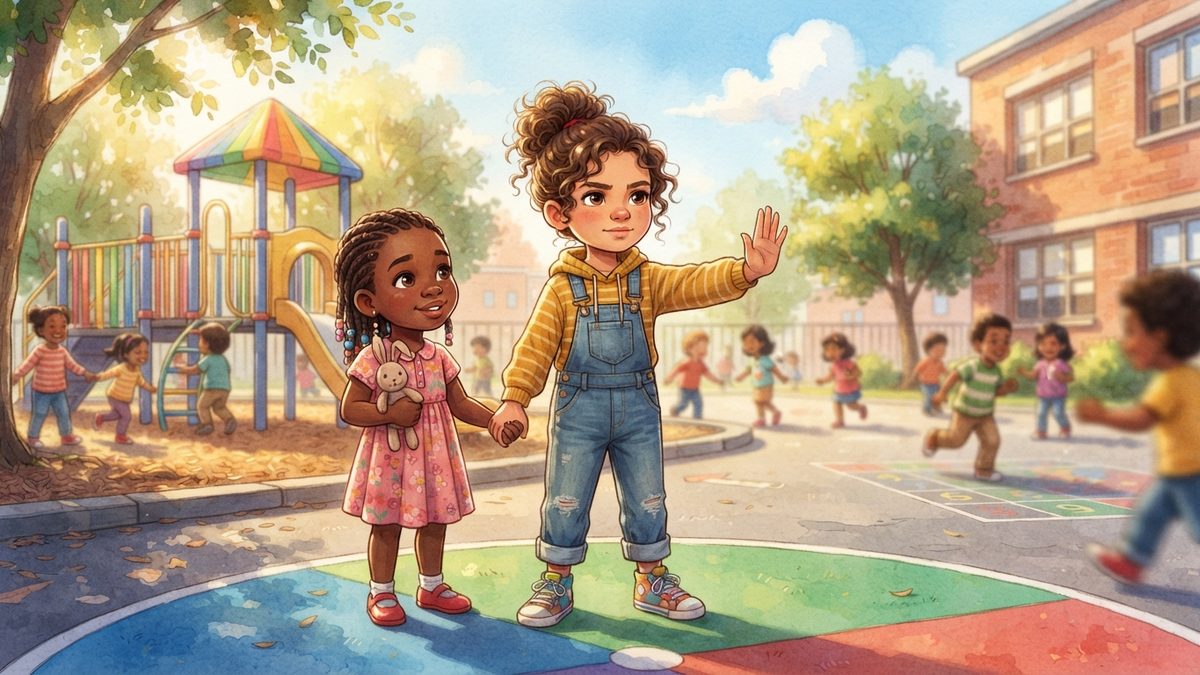
Getting a phone call from a teacher or another parent reporting that your child hit, mocked, or intentionally excluded a classmate can make your stomach drop. The wave of shame, guilt, and defensive panic is immediate. However, knowing what to do if your child is the bully requires shifting your focus from maternal or paternal panic to clinical curiosity.
Aggressive behavior in childhood is not an immutable personality flaw; it is a critical signal of emotional dysregulation, immature social-cognitive skills, or unmet neurological needs.
When you separate your child's core identity from their outward behavior, you can address the root cause with firm boundaries and deep connection. You do not need harsh punitive punishments, nor can you afford passive permissiveness. You need a sturdy, evidence-based roadmap.
Reduction in recurrent peer aggression when parents implement proactive emotion coaching
vs. a 34% increase in covert antisocial behaviors under punitive authoritarian discipline
The Neurobiology of Bullying: Why Children Act Out #
To intervene effectively, parents must understand what happens inside a developing child's nervous system during aggressive episodes. Early childhood peer conflict is rarely calculated malice. Instead, it stems from an asynchronous developmental balance between the limbic system and the prefrontal cortex.
According to research from the Harvard Center on the Developing Child, the prefrontal regions responsible for executive functioning, impulse control, and perspective-taking (Theory of Mind) do not fully mature until early adulthood. When a young child experiences social anxiety, frustration, sensory overload, or feelings of powerlessness, their amygdala triggers a stress response.
When the amygdala takes over, blood flow shifts away from rational problem-solving centers. A child who lacks the verbal tools to say "I feel left out and jealous" may instead push a peer off the swing. Aggression becomes a maladaptive strategy to regain control, assert social dominance, or discharge overwhelming physiological tension.
This is frequently seen when children experience daycare restraint collapse, exhausting their self-regulation capacity during structured hours and lashing out when their reserves are depleted.
The Sturdy Parenting Philosophy: High Warmth, Uncompromising Limits #
When faced with a report of bullying, parents often swing between two counterproductive extremes: authoritarian punishment (grounding, yelling, isolation) or permissive minimization (saying "kids will be kids" or ignoring the complaint).
Developmental psychology confirms that both extremes fail. Authoritarian methods spike cortisol levels, teaching children to hide their actions rather than develop empathy. Permissiveness leaves children feeling internally unsafe because they lack predictable adult guardrails.
The clinical gold standard is Authoritative (Sturdy) Parenting: delivering deep emotional validation alongside unshakeable, non-negotiable behavioral boundaries.
| Peer Conflict Scenario | Permissive Approach | Authoritarian Approach | Balanced Sturdy Solution |
|---|---|---|---|
| Child pushes peer off the slide | Dismisses: "They were just playing rough." | Punitive: "You're grounded for a week! Go to your room!" | Validates urge + enforces limit: "You wanted a turn right away, AND pushing is never safe. We are stepping away to practice waiting." |
| Child organizes group to exclude a classmate | Ignores social dynamics; hopes it resolves itself | Shames: "You are being a terrible friend. Apologize right now!" | Directly intervenes: "Leaving someone out to feel powerful is not allowed in our family. Let's look at how we repair this." |
| Child laughs at another child's mistake | Chuckles along or says nothing | Demands immediate forced apology under threat | Neutral boundary: "We do not laugh at mistakes. Our job is to help our peers feel safe. Let's check in on them." |
"When a child is emotionally dysregulated, connection must precede correction. First provide physical presence and emotional attunement, then firmly hold the boundary without shame."
— Dr. Daniel Siegel & Dr. Tina Payne Bryson, Authors of The Whole-Brain Child
What to Do If Your Child Is the Bully: The 4-Step Protocol #
When you receive an incident report from school or observe aggressive behavior firsthand, follow this definitive 4-step sequence.
Step 1: De-Escalate the Immediate Environment #
Do not conduct an interrogation while your child or you are in a heightened emotional state. If the incident just occurred, separate the children neutrally.
- Lower your vocal tone and soften your posture.
- State the concrete boundary: "My number one job is to keep everyone safe. I cannot let you hit."
- Allow your child's nervous system to return to baseline before analyzing what happened.
Step 2: Investigate the Root Need (Curiosity Over Cross-Examination) #
Children shut down when cross-examined. Instead of asking "Why did you do that?", address the underlying emotional driver.
- Acknowledge the underlying feeling: "You were really frustrated when Leo took the red marker."
- Separate the emotion from the behavior: "It is okay to feel angry. It is never okay to use your body to hurt someone."
- Identify the missing skill: Did they need a turn-taking script? Did they feel socially insecure?
Step 3: Implement Meaningful Restitution (Not Forced Apologies) #
A forced, mumbled "sorry" does not build empathy; it merely teaches compliance. Meaningful restitution requires the child to actively participate in repairing the social rupture.
- Wait until your child is calm and receptive.
- Ask: "What can we do to help your classmate feel safe and respected around you again?"
- Options include drawing a restorative picture, writing a genuine note of repair, or directly asking the peer, "How can I make this right?"
Step 4: Re-Wire Prosocial Behaviors Through Rehearsal #
Neural pathways for empathy and conflict resolution strengthen through repetition. Run low-stakes roleplay scenarios at home to rehearse alternative reactions before your child returns to the classroom or playground.
Word-for-Word Scripts for High-Resistance Moments #
When addressing aggressive behavior, children often deploy defense mechanisms like denial, blame-shifting, or hostility. Use these clinical scripts to hold your boundary without escalating conflict.
Script 1: When Your Child Denies the Incident #
- Child: "I didn't do anything! The teacher is lying, and Sam started it anyway!"
- Parent: "I hear that you feel frustrated and that things felt unfair. I am not looking to get you in trouble; I am here to help you solve this. The school let me know what happened, and in our family, we take responsibility when someone gets hurt. Let's talk about what felt so hard in that moment."
Script 2: When Your Child Expresses Hostility or Justifies Harm #
- Child: "I don't care that she cried. She's annoying and nobody likes her!"
- Parent: "You don't have to be best friends with everyone in your class, AND you must treat every person with basic respect. When you say those words, it tells me your heart is feeling guarded or angry. Let's take three slow breaths together and figure out what is really bothering you."
Script 3: Guiding Restitution Without Public Shame #
- Child: "I am not going to say sorry in front of the whole class. You can't make me!"
- Parent: "You don't have to make a big speech. But repair is non-negotiable. Would you prefer to write a short note that says 'I was wrong to take your ball, and I will respect your space tomorrow,' or would you like me to stand beside you while you tell your teacher privately?"
Understanding both sides of peer conflict is crucial for raising empathetic children; learning how to counsel a bullied child provides powerful insight into the exact emotional impact that aggressive behavior causes on the receiving end.
Rewiring Empathy: How Storytelling Builds Social-Cognitive Brains #
Lectures and rule lists rarely reach a child's deep emotional memory. Narrative immersion, however, directly engages mirror neurons—the brain cells responsible for empathy and theory of mind.
When children listen to or read stories about characters navigating jealousy, social exclusion, anger, and redemption, they mentally rehearse perspective-taking in a zero-stakes environment. Exploring the 5 proven benefits of reading bedtime stories to your children highlights how regular shared narratives dramatically strengthen emotional vocabulary and cognitive self-regulation.
This is where Fabella serves as an indispensable co-parenting tool:
- Perspective-Taking Narratives: Fabella’s rich library of interactive, voice-narrated storybooks places children inside the emotional worlds of relatable characters, showing how actions impact others.
- Interactive Moral Decision-Making: Branching storylines allow children to choose how a character responds to anger or peer pressure, experiencing the social outcome within the safe safety of a bedtime story.
- Calming Audio Regulation: Soothing narrations naturally down-regulate evening cortisol levels, moving children out of defensive fight-or-flight states into reflective, open learning states.
Tonight at 7:30 PM: Your Closed-Ended Implementation Plan #
Do not wait for another school incident report to build your child's emotional regulation skills. Implement this definitive 3-step routine tonight:
- 7:30 PM — The De-Shaming Connection: Sit side-by-side with your child during bedtime wind-down. Say: "I love you unconditionally on your best days and on your hardest days. When you make a mistake with a friend, we work together to fix it."
- 7:40 PM — Shared Narrative Reflection: Open Fabella and select a story focusing on empathy, peer inclusion, or managing big emotions. Pause midway and ask: "How do you think the little bear felt when he was left off the team? What could his friend do to help?"
- 7:55 PM — The Clear Action Commitment: Lock in one concrete prosocial goal for tomorrow morning: "Tomorrow at recess, when you want to join the game, what are the exact words you will use?" Rehearse them out loud twice, seal it with a hug, and turn out the lights.