When a toddler trades rapid-fire digital video for a flat paper book, their developing brain experiences a profound sensory crash. If your little one throws a tantrum when you swap the tablet for a bedtime story, you are not alone. Learning how to transition toddler from screens to books requires understanding early brain wiring rather than forcing sudden cold-turkey battles.
By using a multi-sensory storytelling bridge, parents can gently recalibrate a child's dopamine baseline while nurturing a lifelong love for reading.
The Neurobiology of Screen Resistance #
Fast-paced children’s media floods the developing brain with rapid visual scene changes every 2 to 3 seconds. As explored in our breakdown of the CoComelon effect and toddler dysregulation, hyper-stimulating media conditions the reward pathway to anticipate continuous novelty.
When you hand a screen-habituated toddler a static print book, their nervous system perceives the lack of rapid motion as under-stimulation. Moving directly from high-velocity streaming to quiet print often triggers frustration.
Total words heard by age 5 when read to 5 times per week
vs. only 4,662 words for children never read to (The Million Word Gap)
The Sturdy Parenting Approach to Screen Off-Ramping #
Navigating the shift from screens to books demands a balance of high warmth and unyielding structure. Permissive parenting caves into demands for "just one more video," while authoritarian parenting resorts to abrupt punishment and power struggles.
"When a child is emotionally dysregulated, connection must precede correction. First provide physical presence and emotional attunement, then firmly hold the boundary."
— Dr. Daniel Siegel & Dr. Tina Payne Bryson, Authors of The Whole-Brain Child
How to Transition Toddler from Screens to Books: The 3-Step Protocol #
To successfully reset your child's engagement, implement this closed-ended protocol tonight at 7:00 PM:
Step 1: Use an Interactive Audio Bridge #
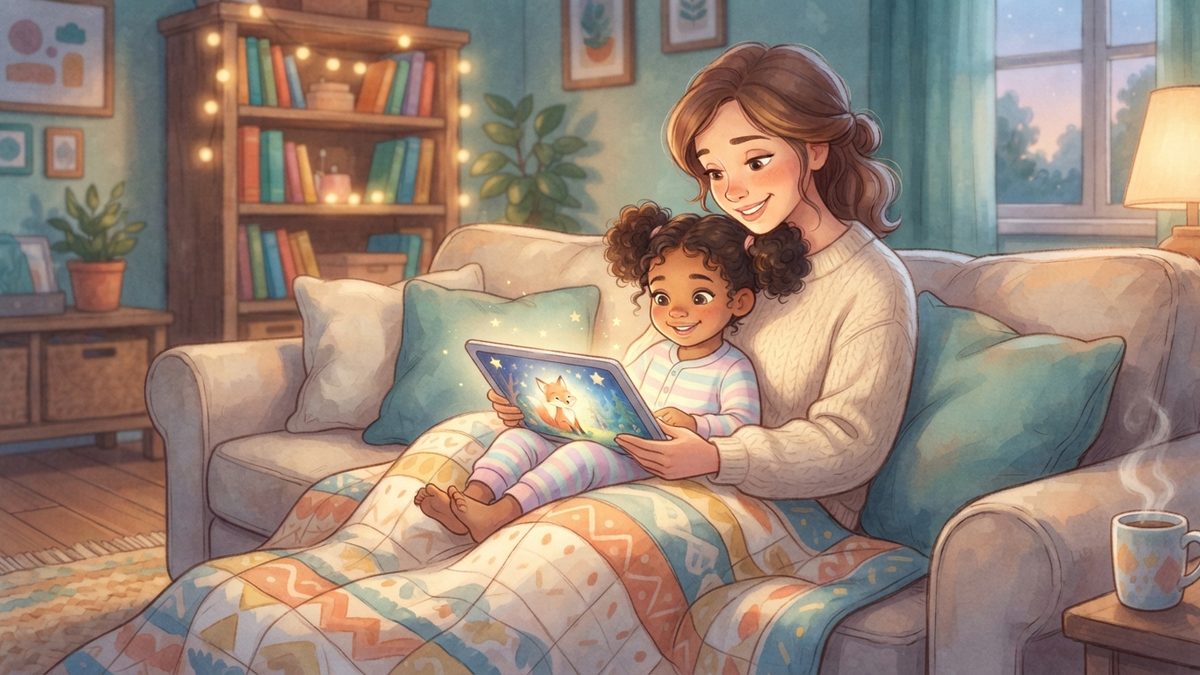
Do not jump straight from hyper-stimulating cartoons to silent print. Start with slow-paced, beautifully voice-narrated digital storybooks on platforms like Fabella. Fabella pairs soothing voice narration with calm, purposeful illustrations. This activates the neurological mechanisms of dual-coding without over-stimulating the nervous system (learn more about how interactive books improve early literacy).
Step 2: Transition to Tactile Print #
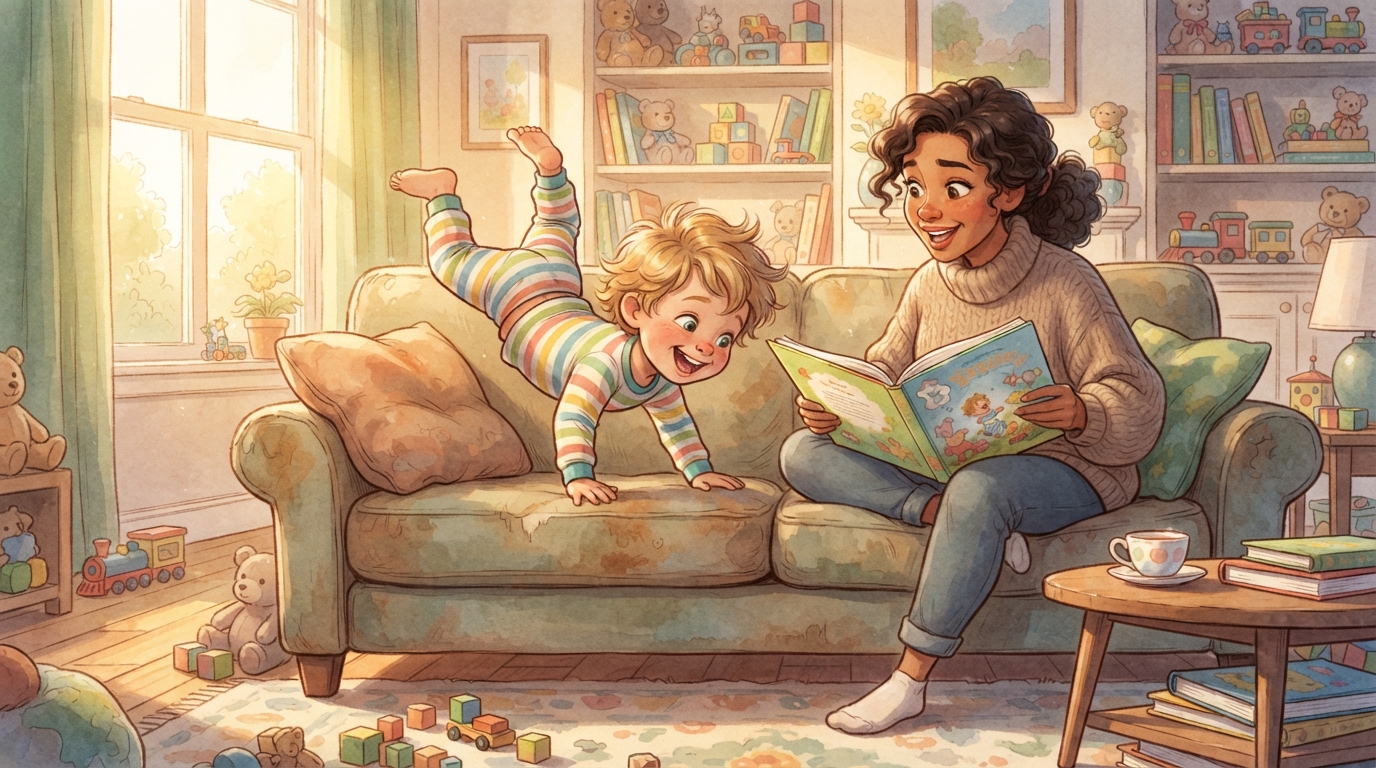
After 3–5 days with the digital audio bridge, introduce tactile print books—such as lift-the-flap, textured touch-and-feel, or search-and-find books. These give fidgety hands an active job while engaging their visual cortex.
Step 3: Hold the Boundary with Clear Scripts #
When resistance occurs, validate their emotion while holding the boundary steady:
- Toddler: "No books! I want my tablet! Turn on the show!"
- Parent: "You really love watching that show, and it feels hard to stop. AND the tablet is sleeping for the night. We are reading our story together now. Do you want to turn the first page, or should I?"
Stay grounded, keep the routine predictable, and let the gentle rhythm of shared stories rebuild your child's imagination.